


On 6th February 2025, the Centre trained 72 seasonal members of Kenyatta University staff on gender based violence and on how to use the reporting platforms to report incidences of GBV. Similarly, on 7th February 2025, in conjunction with the KUSA Gender and Special Needs Secretary, Miss. Virginia Mwangi, the Centre held a gender sensitization session with 99 students. During this session, the director spoke broadly on forms of GBV, reasons why people do not report, especially fear and stigma and finally informed the participants of the SGBV Reporting Platforms that aid in anonymous reporting.
On 13thof February 2025, the Centre visited the Kabete National Polytechnic during the pre-valentine ladies gender mentorship programme and sensitized 138 participants on forms of GBV, how to protect yourself and avoid being a survivor of GBV and on the reporting platforms. They were urged to carry our research of safe and unsafe spaces in their campus during the day and night as a preventive measure to curb GBV incidences on and around campus.
On 21st March and 27th March 2025, the Centre trained students and members of staff of Nakuru and Mombasa TVET Centres on gender, GBV and reporting mechanisms including the KU SGBV Reporting platforms respectively. During these trainings, the participants were taken through a practical session of downloading the mobile application and guided through on how to make a report.
Additionally, the Centre has trained and recruited twelve students (12) from ALL Kenyatta University Schools to aid in its advocacy efforts. The aim of the training was to equip students with skills to facilitate dissemination of GBV material as well as socially market the KUSGBV reporting platforms to fellow students. The ambassador work closely with other students in the prevention and reporting incidences of SGBV as well as provide support as need arise. In February, 2025, the Centre for Gender Equity and Empowerment sent out a goggle survey of Sexual and Gender Based Violence and Sexual and Gender Based Violence Reporting digital application awareness to Kenyatta University staff and students of which data was analysed and a report has been produced.
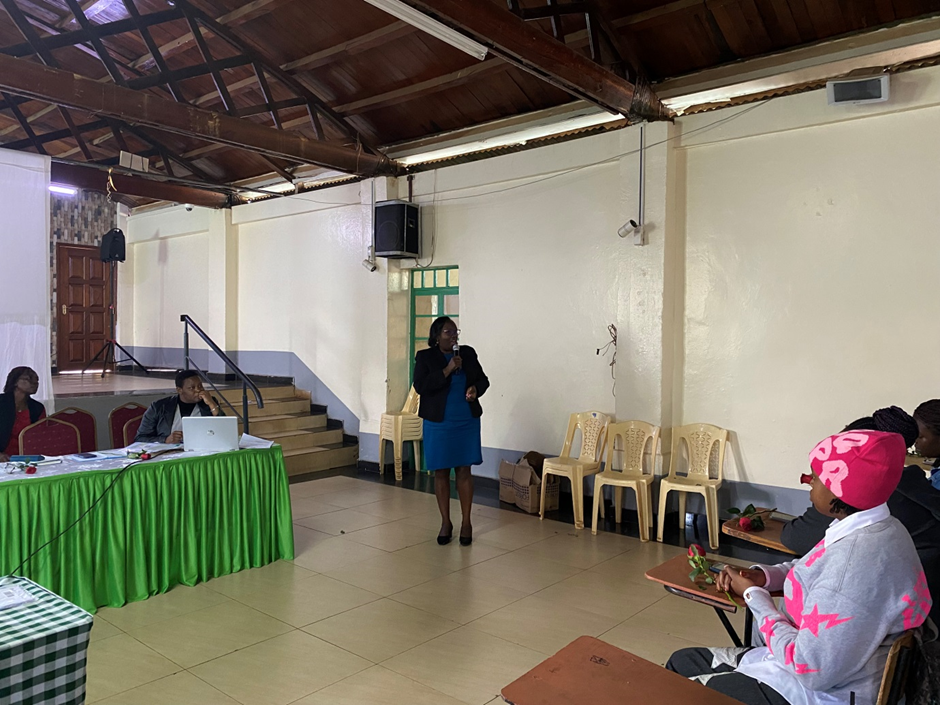
Prof. Winnie Mutuku addressing participants at Kabete National Polytechnic
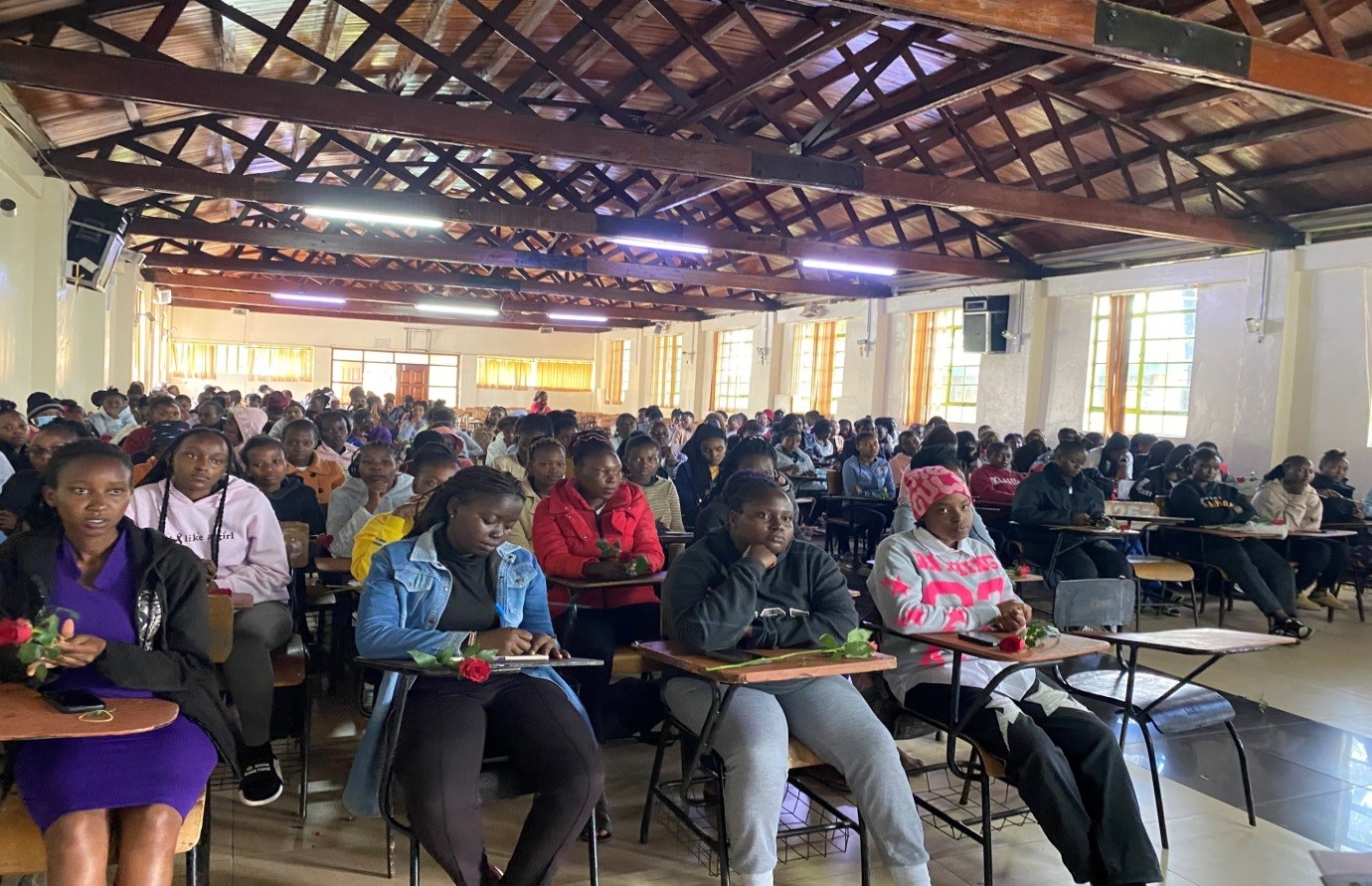
Participants at Kabete National Polytechnic on 13th February 2025
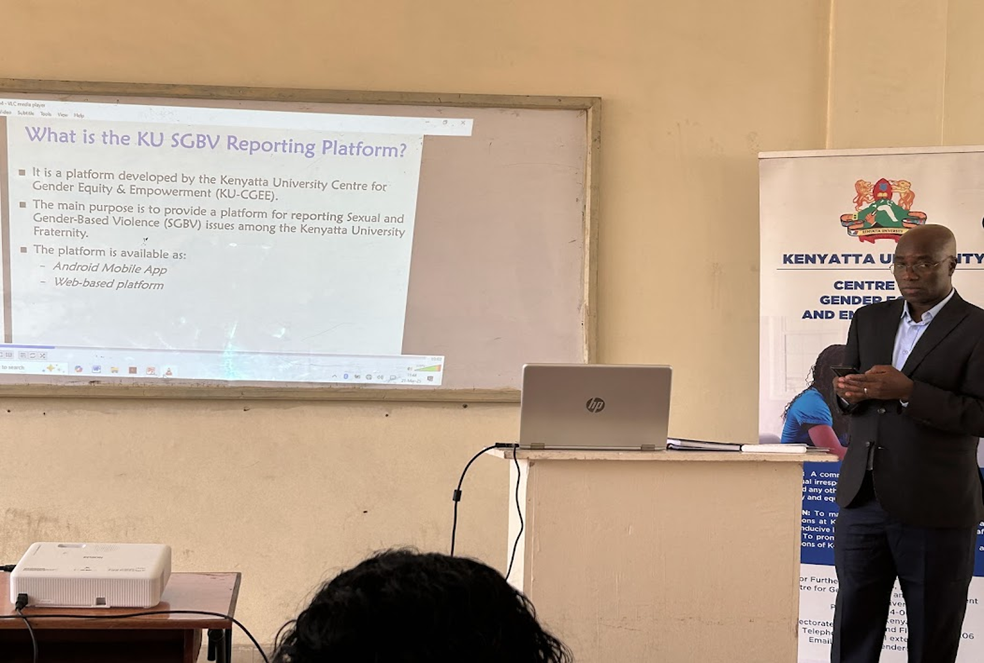
Dr. Eric Masika, researcher for, “Prevention of violence against women and girls with a particular focus on higher and further education institutions as safe spaces for women” project presenting at Nakuru Campus on 21st March 2025.
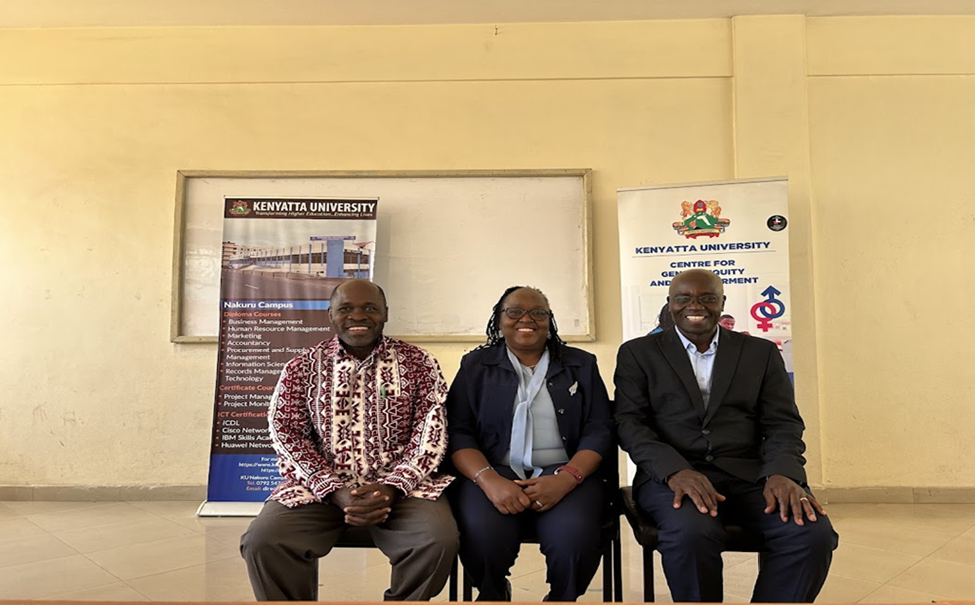
Dr. Ambrose Jagongo, Director Nakuru Campus (left) with training team from Main Campus on 21st March 2025.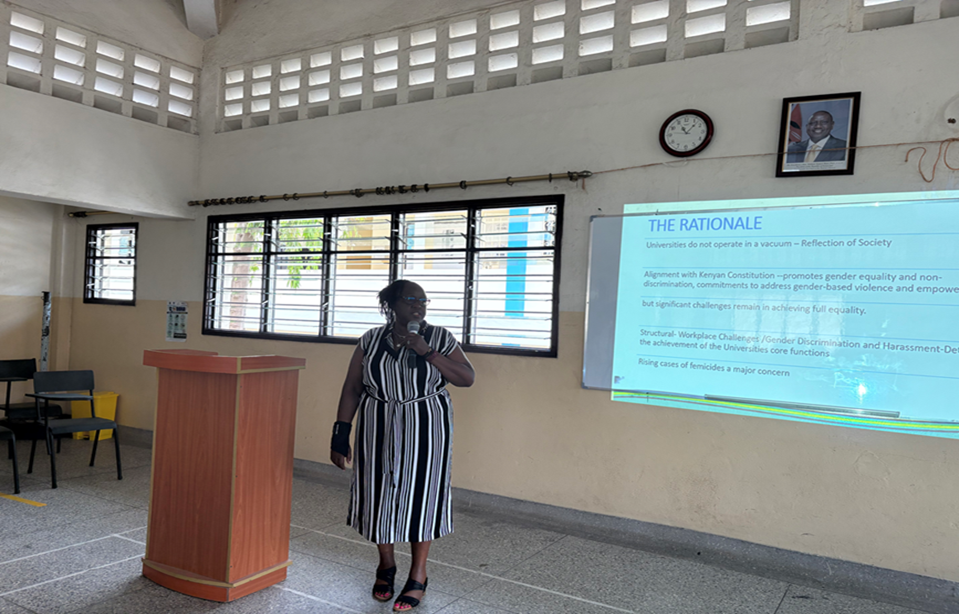
Ms. Mary Mwangi, Chairperson, Committee on Sexual and Gender Based Violence presenting at Mombasa Campus on 27th March 2025.
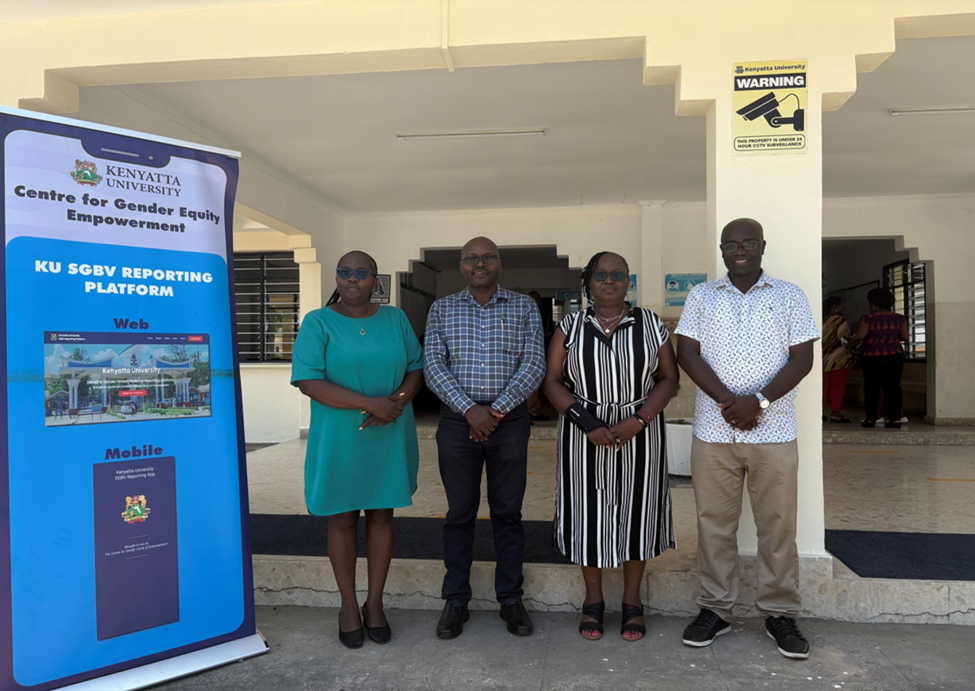
Dr. James Kathuri, Director, Mombasa Campus (centre) with training team from Main Campus on 27th March 2025
- Details
Kenyatta University Center for Gender Equity and Empowerment in collaboration with Kenyatta University Women’s Economic empowerment hub celebrated the International Women’s Day on 7th March 2024 at BSSC room 14. This year the theme was Accelerate Action for Women and Girls: Rights. Equality. Empowerment”. The theme wished to call upon the society and the world at large to not only recognize the potential of women, but also include them in the development agenda.
The event was attended by members of management, members of staff, members of KUSA congress and students.
The speakers of the event were;
- Chief Guest, Prof. James Kung’u, Ag. Deputy Vice-Chancellor (Academic), representing KU’s Acting Vice-Chancellor, Prof. Waceke Wanjohi,
- Prof. Richard O. Oduor, Registrar (Research, Innovation and Outreach) representing Prof. Caroline L. Thoruwa, Ag. Deputy Vice-Chancellor (Research Innovation and Outreach)
- Prof. Judith N. Waudo, Director, Centre for Gender Equity &Empowerment and KU-WEE Hub Leader;
Prof. Richard O. Oduor, Registrar (Research, Innovation and Outreach) representing Prof. Caroline L. Thoruwa, Ag. Deputy Vice-Chancellor (Research Innovation and Outreach) in his remarks pointed out that in order to accelerate action for women and girls to protect their rights, promote equality and empower them, the legal system needs to effectively enforce its laws and regulations, women should be included in decision making by being appointed to leadership roles and should “sit on the table but not under the table” to make rules that affect their lives socially, economically and health wise. Additionally, girls should be educated to make informed decisions on themselves and others. Gender parity in technical jobs can be minimized by encouraging girls from a young age to take up STEM (Science, Technology, Engineering, and Mathematics) oriented carriers and better pay.
Prof. James Kung’u, Ag. Deputy Vice-Chancellor (Academic), representing KU’s Acting Vice-Chancellor, Prof. Waceke Wanjohi, in his remarks noted that although women have made great strides in many areas but in some areas their participation and accomplishments remain dismissal due to past, socio-norms and cultural barriers such as limited access to education, leadership, political participation, decision making and economic development have negatively affected women’s advancement. However, today, as more girls access education, they are taking up leadership positions. Women are shining in academia, politics, business, media and the private sector. Through mentorship, young women can be guided to see their potential, support them in navigating the complexities of academic and professional life, and empower them to step into their own leadership roles.
Further, Prof. Kungu, pointed out how the Constitution of Kenya reiterates the principle of empowering people with special needs, mainstreaming gender and enhancing support to orphans so as to reduce dependency in all aspects of the society, by affirming that women and men have the rights to equal treatment, including the right to equal opportunities in political, economic, cultural and social spheres. Consequently, Kenyatta University is committed to the principle of equity and equality, appreciates the impact female leaders can have and recognises that leadership is only effective when it is it is inclusive, diverse, and responsive to the voices and needs of men and women, boys and girls.
Prof. Kung’u concluded the speech by re-affirming Kenyatta University’s commitment to continue Promoting an atmosphere where there is zero tolerance to gender based violence, Providing safe spaces for working and learning and ensuring that men and women are not only represented but also participate adequately in discussions that relate to their wellbeing.
Panel Discussion
This year’s theme is Accelerate Action for Women and Girls: Rights. Equality. Empowerment focused on and emphasizing the importance of taking swift and decisive steps to achieve gender equality. It calls for increased momentum and urgency in addressing the systemic barriers and biases that women face, both in personal and professional spheres.
Led by Dr. Regina Mwatha, KU WEE Hub, Project Leader, an open discussion revolving around prevention of sexual and gender based violence to promote a safe learning and working environment at Kenyatta University was held. The panellists were;
- Prof. Bernard Kivunge, Registrar, Academic spoke on the major steps Kenyatta University has put in place to address Gender Based Violence? In his response he pointed out that regular sensitization and awareness creation is done. Students are encouraged to come forward and report harassment from fellow students, faculty staff and non-teaching staff. Further, there are disciplinary measures depending on the levels of crime and may lead to suspension, expulsion or termination of employment. He concluded by urging the participants to report GBV cases and not suffer in silence.
- Prof. Grace Ngare, Advocacy and Policy Expert, KU-WEE Hub- talked about Gender Based Violence status in Kenya today and what is the rationale for the 2025 IWD theme. According to the research that has been carried out in the media, police and the government shows that, both men and women are experiencing gender based violence. However, GBV is very rampant among women and girls. Research shows that most women experiencing GBV are in the age bracket of 15-49 years. She pointed out that, excessive use of alcohol and drug abuse is a huge contributor to GBV as it aggravates the abuser and incapacitates the survivor or victim. Additionally, the legal system has policies but there is a challenge of implementing it. To conclude, Prof. Ngare noted that GBV does not happen overnight; it is a process, so, watch out and run; be active bystanders; take action.
- Dr. Gabriel Waari, Director Health Services – talked about is done when a case of rape is taken to health unit; and what steps do you take to ensure that there is tight evidence in case of litigation. There is aguideline whereby the evidence is in form of a health report. Post rape care is done by a medic where the survivor is examined, swabs are taken looking for sperms, test the urine for blood and torn clothes especially underwear. Psychologically, there are counselling services for survivors in emotional distress. Dr. Waari pointed out that the challenge they face most is late reporting and other come to report after showering therefore making it difficult to collect any usable DNA samples. Further, he informed participants that medical care is 24 hours 7 days a week and there is a 72 hour window for PEP.
- Dr. George Oyombra, Director Security Services- highlighted on the steps taken when a case of GBV is reported and mechanisms have in place to ensure that GBV survivors receive immediate justice. It depends on the nature of GBV case. For instance, if it is rape, the survivor is to report to health unit immediately, then write a statement at the police station and finally go through the legal system for prosecution. If its assault, a statement is written and witnesses are invited to make statements as well, the directorate does further investigations and forwards the case to University disciplinary to decide on final punishment. Dr. Oyombra pointed out that most GBV cases are under reported due to threats, stigma. Etc. however, he encouraged reporting and assured safety and confidentiality.
- Mr. Edwin Musembi, Dept. of Gender and Development Studies- spoke on push factors that support GBV at the Kenyatta University. Some of the factors highlighted were;
a. Cultural norms
b. Unsafe spaces like unlit paths
c. Stigmatization due to societal norms
d. Financial distress
e. Drug abuse in campus
f. Not knowing where to report
He concluded by encouraging members present to download the KU SGBV REPORT App and further urged fellow men to come forward and report, and not let their silence slowly consume them.
Conclusion
From the above discussion, all panellists agreed that;
- GBV is one of the greatest barriers to growth for both genders but largely women.
- Most survivors do not report GBV cases due to fear and stigma.
- Reporting is the most convenient way to stop perpetrators and not enable them by keeping quiet.
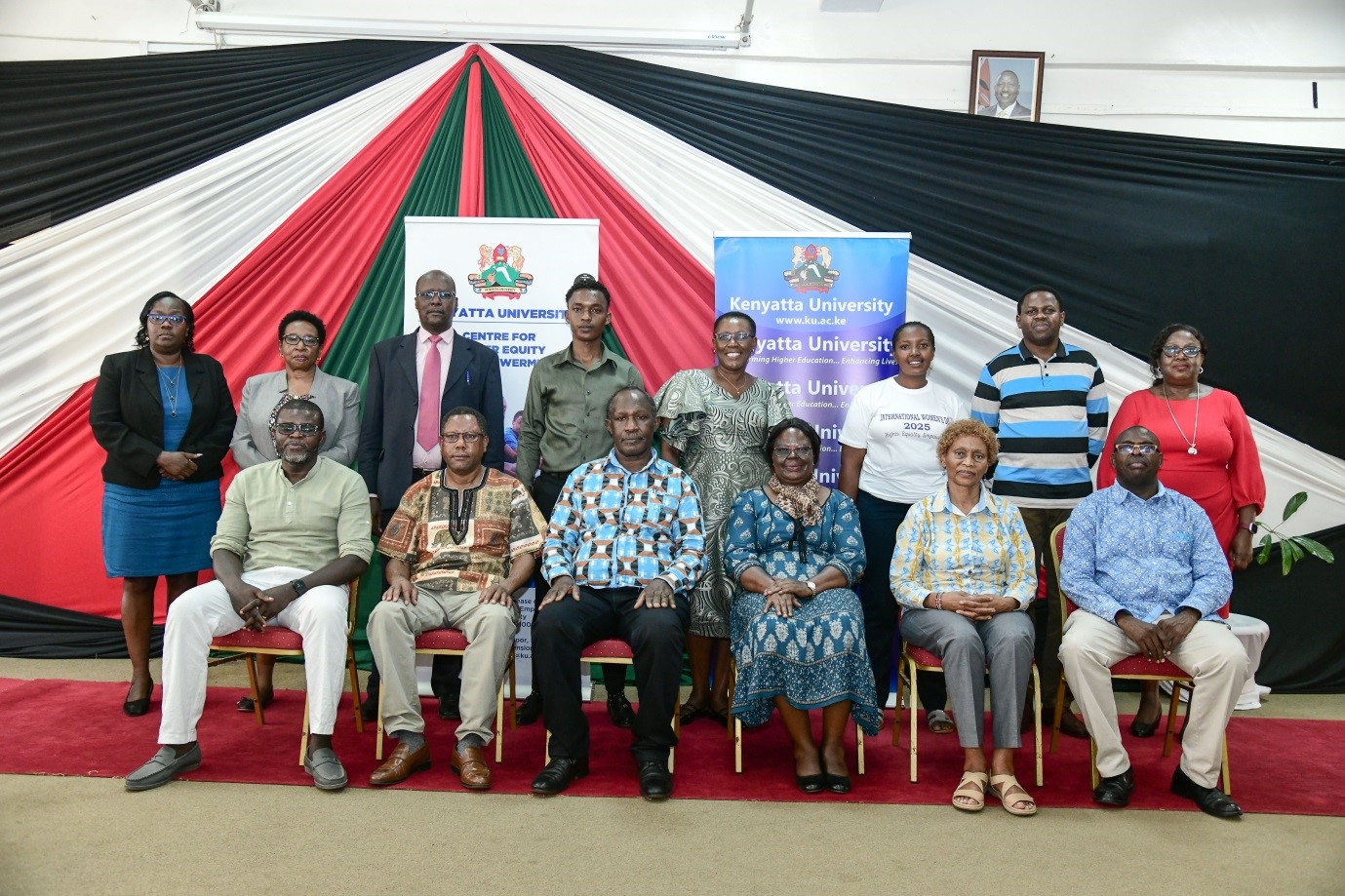
Chief Guest, Prof. James Kung’u, Ag. Deputy Vice-Chancellor (Academic) with selected members of staff present.
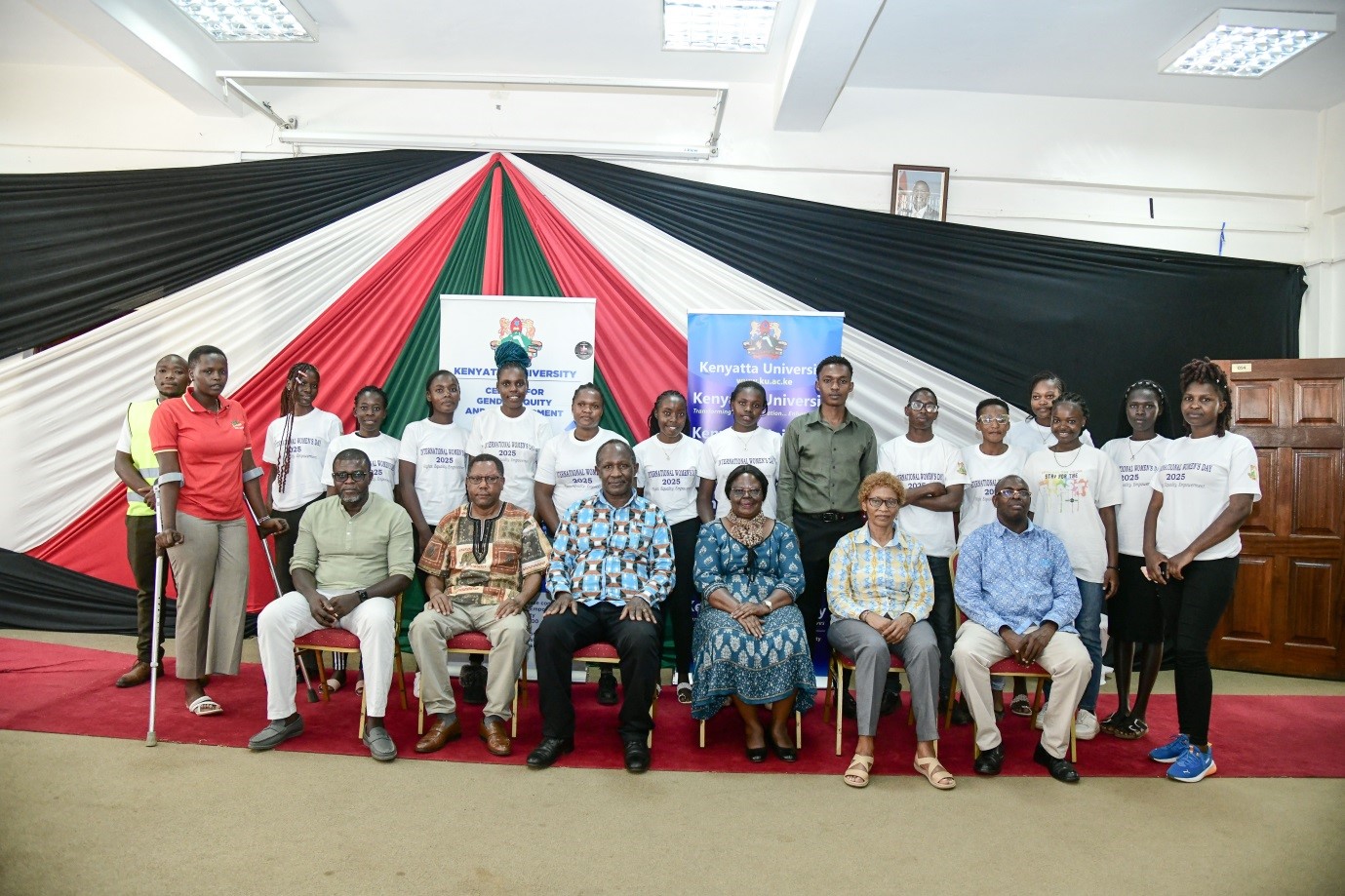
Chief Guest, Prof. James Kung’u, Ag. Deputy Vice-Chancellor (Academic) with selected student participants.
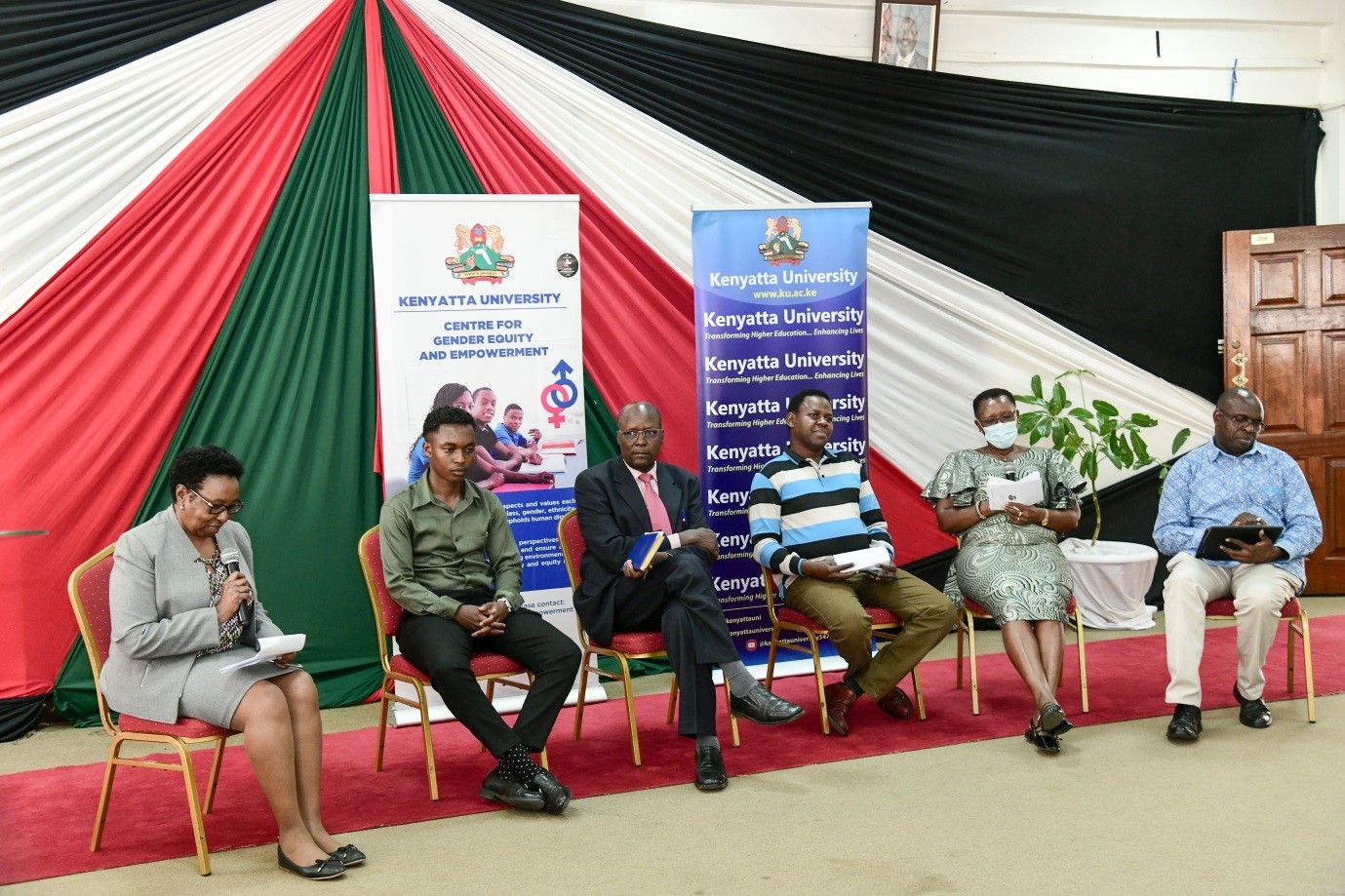
Dr. Regina Mwatha, KU WEE Hub, Project Leader (far left) presiding over an open discussion revolving around prevention of sexual and gender based violence to promote a safe learning and working environment at Kenyatta University
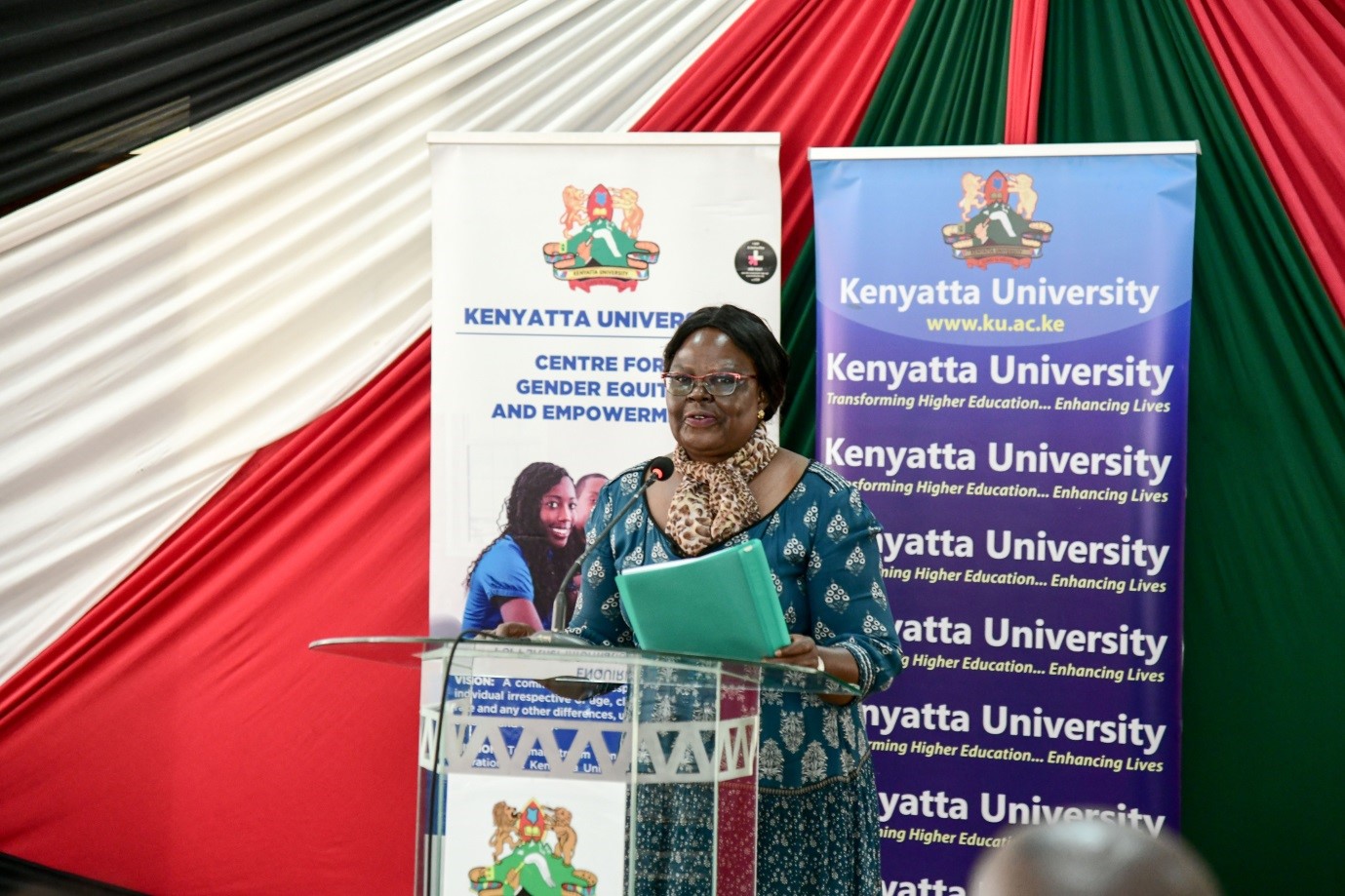
Prof. Waudo addressing participants during the International Women’s Day
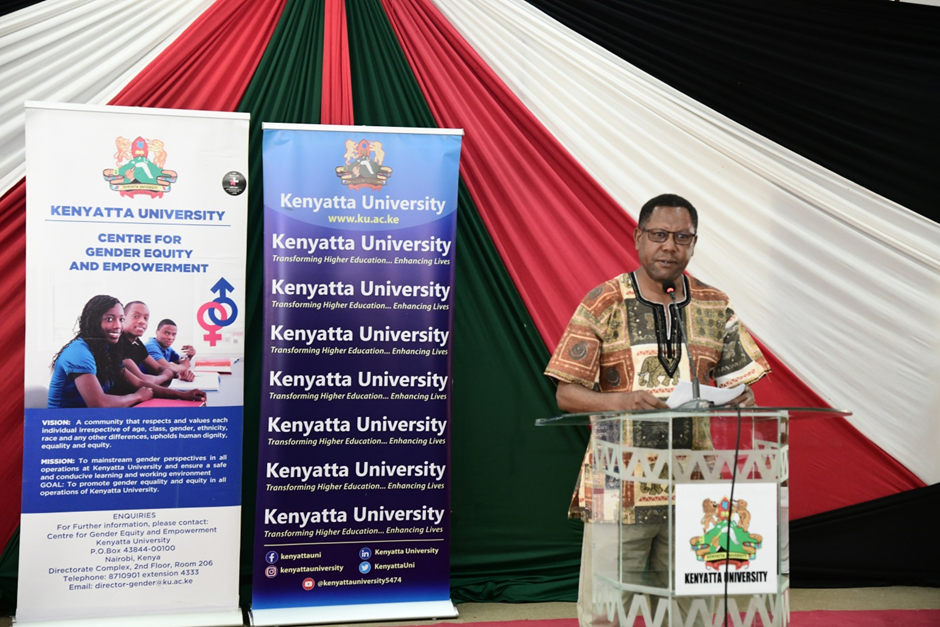
Prof. Nicolus Gikonyo representing Prof. Caroline L. Thoruwa, Ag. Deputy Vice-Chancellor (Research Innovation and Outreach)
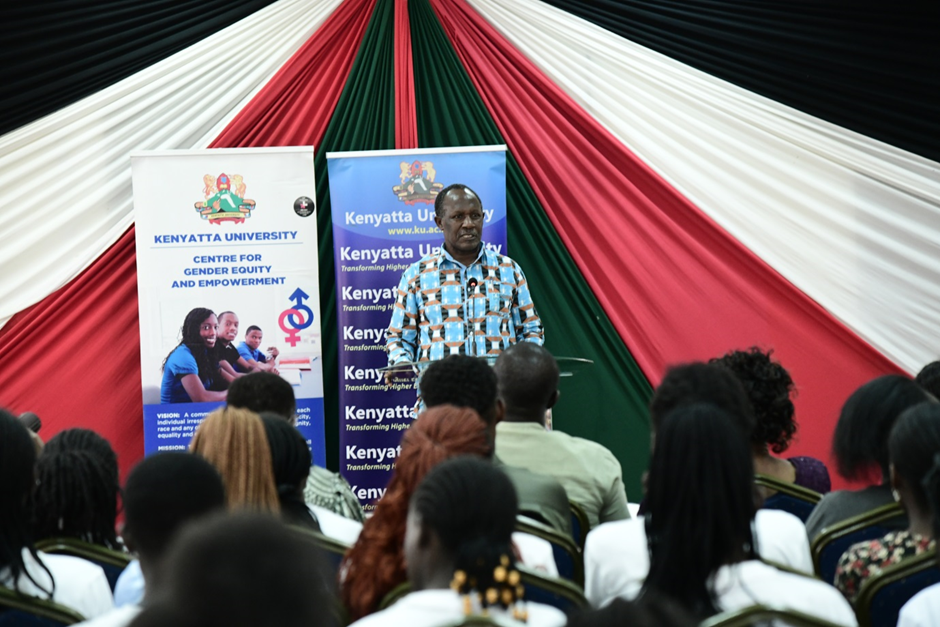
Chief Guest, Prof. James Kung’u, Ag. Deputy Vice-Chancellor (Academic), representing KU’s Acting Vice-Chancellor, Prof. Waceke Wanjohi
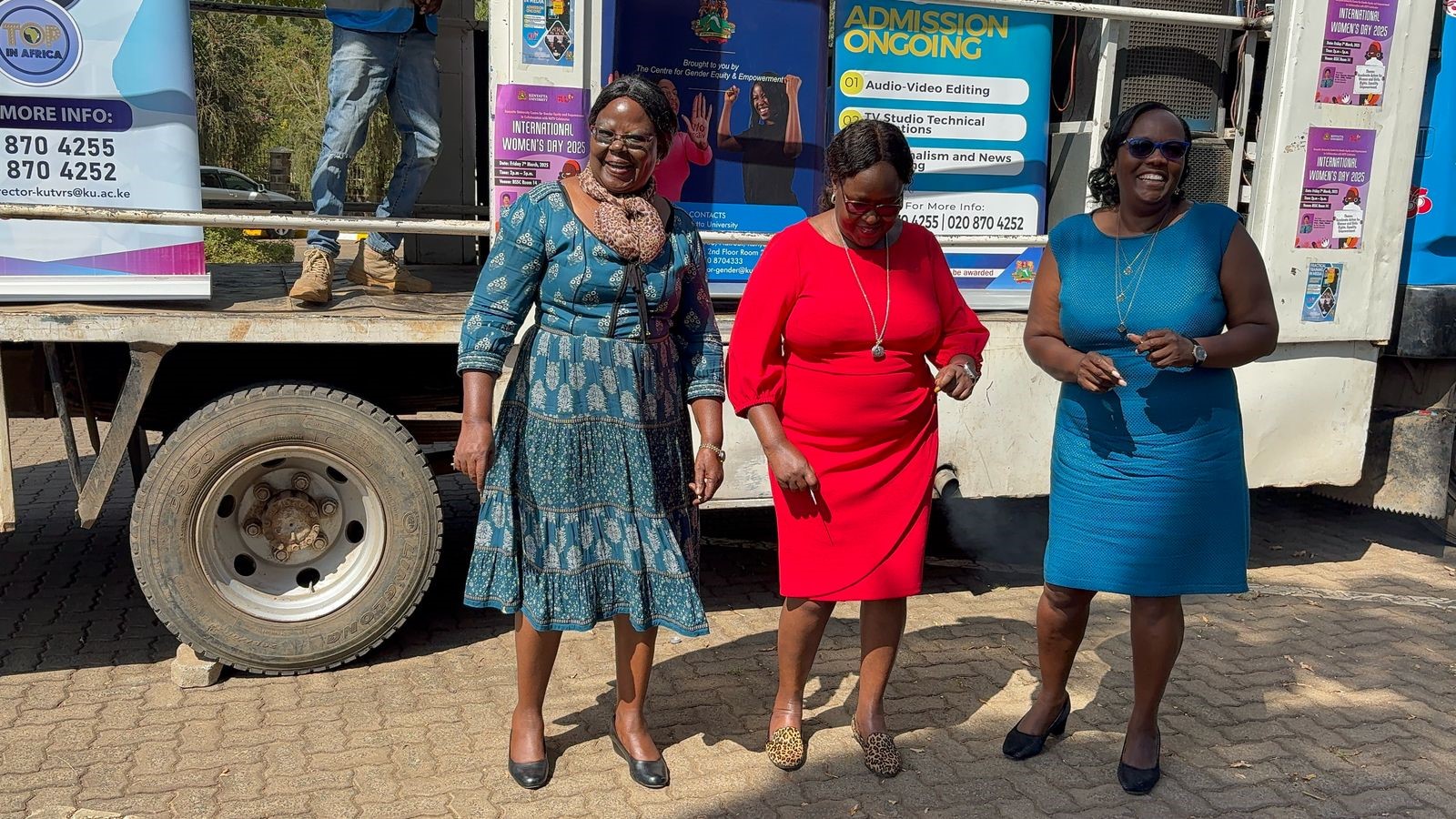
Project staff flagging off the caravan on 7th March 2025, International Women’s Day
- Details

Kenyatta University’s Centre for Gender Equity and Empowerment in collaboration with the Department of Sociology, Gender and Development Studies marked the 16 days of activism against gender based violence (GBV) through various activities. From 25th November, the International Day for the Elimination of violence against Women to 10th December, Human Rights Day, the 16 days of activism against GBV campaign is a time to increase action to end violence against women and girls around the world.
This year’s theme was “Towards Beijing +30: UNiTE to End Violence against Women and Girls”. This period came at a time when the world was grappling with raising cases of femicide in our households, institutions and nation with a majority of victims being women, youth and children.
A event to advocate against SGBV was, held on Wednesday, 27th November 2024. This event was attended by members of management, members of staff, members of KUSA congress and students. The Acting Vice Chancellor, Prof. Waceke Wanjohi presided over this event as the Chief Guest.
Other speakers during this event were;
1. Dr. James Koskei Ag. Deputy Vice-Chancellor, Academic
2. Prof. Judith N. Waudo, Director, Centre for Gender Equity &Empowerment and KU-WEE Hub Leader;
3. Ms. Virginia Mwangi, Kenyatta University Student Association (KUSA) Gender Secretary
In her remarks, Ms. Mwangi, noted that Kenyatta University has achieved yet another avenue to create safe spaces for students and especially girls to be empowered through education especially when cases of femicide have been on the rise. She acknowledged and applauded the Ag. Vice Chancellor, Prof. Waceke Wanjohi, for her commitment to eliminating gender based violence for the Kenyatta University fraternity.
Prof. Waudo, during her remarks, spoke strongly against the culture of silence around GBV. This silence enables the perpetrators to commit more crimes like femicide because they are not reported and they get away with their inhumane acts. Further, the silence aggravates the situation due to the survivors not getting proper help such as proper medical care and counselling. The director informed the participants about the KU SGBV reporting platform; mobile application and web page. Briefly, she highlighted the features of the reporting platform namely; enable anonymous and secure reporting, provide a secure storage space for evidence, provide analysable data on the reports and sensitize the University community on SGBV and Gender Equity. Prof. Waudo emphasized the importance of speaking up for yourself and friends when a case of GBV occurs and hopped that this reporting platform will provide the university with a safe and secure platform to report to provide swift justice to survivors.
Dr. Koskei noted that, the largely patriarchal society in Kenya and Africa in general, has immensely contributed to the oppression of women and and women being treated as inferior to men. These has existed since time in memorial in both the public and private sphere where women are isolated and subordinated in in the name of culture; sexuality, violence, and the state. He said that, it is high time that men are extensively engaged in fighting gender based violence and be the voices of change for their granddaughters, daughters, wives, sisters, mothers and all women in the society.
The Vice Chancellor, Prof. Waceke, begun her speech by recognizing that femicide has become an epidemic in Kenya and cuts across all the socio-economic classes. Additionally, she noted that learning institutions and the work place, being gendered spaces can also be an arena of violence. Further, SGBV negatively impacts on learning and the gender relations that are played out in a learning environment and can reduce academic performance due to absenteeism, increased drop out, emotional or behavioral disorder and mental health.
On the positive side, Prof. Waceke acknowledged that several interventions have been put in place at Kenyatta University to prevent and respond to GBV. The Kenyatta University Sexual Gender Based Violence (SGBV) Reporting Web page and the Kenyatta University Sexual and Gender Based Violence (SGBV) Reporting Mobile applications will aid in reporting SGBV cases and receipt of immediate justice by survivors. The two innovations will play key role in continuously sensitization of the Kenyatta University community on prevention of SGBV thus creating safe spaces within Kenyatta University.
The Vice Chancellor concluded her remarks by urging everyone to take a stand, speak up, do something to shift these harmful norms and make SGBV an everyday conversation.
Afterwards, Prof. Waceke joined everyone in a candle lighting ceremony to honour and recognize victims of femicide in Kenya. During this ceremony, she made a commitment to use her position as the Vice Chancellor to talk about GBV in all platforms and create awareness about the importance of speaking up.
A webinar to share data on intimate partner violence and femicide was held on Friday 29th November 2024. The speakers during the webinar were;
1. Prof. Judith Waudo, Director, Centre for Gender Equity &Empowerment spoke on the Creation of Safe Spaces within Kenyatta University. She highlighted activities carried out on the“Prevention of violence against women and girls with a particular focus on higher and further education institutions as safe spaces for women” project funded by the British Council. The main objective of this project, focused on the implementation of a digital SGBV reporting application to prevent and reduce incidence of gender-based violence. This was achieved by enabling anonymous reporting, gathering crucial data on incidents, and delivering advocacy resources to stakeholders. The anonimity was achieved through the implimentation of the Kenyatta University sexual & gender based violence reporting platform (Web and Mobile Applications).
2. Ms. Jeanette Nyanjom, Chief Executive Officer FAWE Kenya (FAWEK) spoke on the I Care about Her Campaign in partnership with the Mastercard Foundation, which aims to significantly reduce the incidence of teenage pregnancy in Kenya during and beyond the COVID-19 crisis. The goal is to significantly reduce the cases of Teenage pregnancies and child marriage, championing for re-entry of girls to school, to Strengthen Media Engagement for accurate and wide reach, to train and sensitize girls, young women, boys and young men, educators, duty bearers, religious leaders, and local community leaders on human sexuality and prevention of teenage pregnancy (Empowerment Sessions) and deliberately engaging boys and young men in prevention programmes and make them champions of girls’ rights.
3. Dr. Regina Mwatha, KU-WEE Hub Project Leader spoke about the PMA Agile phase 2 Gender/ Gender Based Violence Study. The study was carried out in several areas namely; gender based violence, economic abuse on women; contraceptive access, use and demand and sexual and reproductive health. The aim of the study was to understand knowledge, attitudes, behavior, risk perception, socioeconomic impact and the collateral impact among girls and women. This phase 2 study aimed at generating new priority topics in gender and identify the best, validated measures to fill today’s evidence gaps to inform policy and programs in the country.
4. Ms. Abigail Malelu spoke on technology facilitated GBV. She noted that in today’s world, many people especially young people are the most technologically connected generation yet technology brings both advantages and risks for harm,particularly when it is a tool of abuse or mistreatment, and when privacy is compromised. Cyber abuse is increasingly recognized as a form of violence, yet the existing policy framework has not kept pace with technological developments due to existing gaps in understanding the prevalence of online GBV and most common forms of cyber abuse yet this is the information needed to guide policy makers on prevention and response strategies.
From the webinar it was noted that;
1. GBV persists among women in Kenya
2. GBV tolerance and normalization are actionable barriers to seeking and prevention.
3. Gender-based violence policy guidelines need to be expanded to include technological abuse
4. Women’s reproductive autonomy and freedom from reproductive coercion need continued attention.
5. Gendered practices and norms continue to limit women’s participation and safety.
6. There is need to increase knowledge of and access to GBV response services by placing these services in easy-to-access and comfortable locations for GBV survivors.
7. Engagement of men and boys in fighting and talking about Gender Based Violence is the one way of ending GBV.
8. Continued and intense advocacy on GBV by having panel discussions on national TVs and local radio stations even vernacular, engaging local communities (people in the grassroots) and policy makers (national leaders) to speak against Gender Based Violence is the solution to ending GBV.

The Vice Chancellor, Prof. Waceke addressing participants during the 16 days of Activism against GBV

Dr. James Koskei Ag. Deputy Vice-Chancellor, Academic addressing participants during the 16 days of Activism against GBV

Prof. Judith Waudo, Director Centre for Gender Equity and Empowerment addressing participants during the 16 days of Activism against GBV

Ms. Virginia Mwangi KUSA Gender and Special Needs Secretary addressing participants during the 16 days of Activism against GBV
Vice Chancellor, Prof. Waceke Wanjohi Launches the KU SGBV Reporting web page application and relaunches the SGBVmobile Reporting platform

Vice Chancellor, Prof. Waceke Wanjohi with Prof. Judith Waudo and Dr. James Koskei, Ag. DVC Academics light candles in honour of femicide victims

Vice Chancellor, Prof. Waceke Wanjohi with Prof. Judith Waudo and Dr. James Koskei, Ag. DVC Academics

Participants during the 16 days of Activism against GBV

Vice Chancellor, Prof. Waceke Wanjohi with some of the participants
- Details


The International Day of Girl Child was established by the United Nations in 2011 to draw attention to the need of creating more opportunities for girls and to increase awareness of the gender inequality faced by girls. As we celebrate and mark this day today, we need to bear in mind that gender inequality issues affecting girls in general are engrained in our homes, institutions as well as society at large. Specifically, this inequality cuts across many sectors of the economy namely; education, nutrition, environment, agriculture, manufacturing, mining, tourism, health, leadership among others. The recent release of Usawa Agenda 2024 report on Transformation of Education in Kenya does illustrate these gender gaps in terms of education access, retention, access to teaching /learning resources and performance as girls move up the educational level. From this report, girls are still disadvantaged in many spheres at the upper level of education because of many barriers.
The International Day of the Girl Child is celebrated on 11th October each year. This year’s theme ‘Girls’ vision for the future’ draws attention to the need to create more opportunities for girls and give girls voices to speak up. This theme calls for Kenya as a nation to stand up for the girl child and offer her equal opportunities in every sector of the economy. Statistics do show that when girls are enabled, they do perform equally or even better than boys.
The current generation of young girls are extremely affected by global crises of climate, conflict, poverty and the pushback on hard won gains for human rights and gender equality. Today, many girls are still denied their rights, restricting their choices and limiting their future. In some of Kenyan communities, girls are still restricted in movements, subjected to genital mutilation and circumsion and forced early marriages. These practices negatively impact on girls’ progress. Investing in girls can have a formidable ripple effect to create a better world. In the words of António Guterres United Nations Secretary-General, during the International Women’s Day Celebrations 2023 celebrations, “Gender-based discrimination harms everyone – women, girls, men, and boys. Investing in women uplifts all people, communities, and countries.”
Girls have the right to safety and healthy life, not only during their critical years, but also as they mature into young women. If effectively supported, girls have the potential to change and transform the world, both as empowered girls of today as well as tomorrow’s workers, mothers, entrepreneurs, mentors, household heads, and leaders. An investment in realizing the power of girls upholds their rights today and promises a more equitable and prosperous future. Kenyatta University endeavors to fulfill this mandate through its various programmes including that of enlisting more girls in STEM and research to prevent gender based violence that inflict girls both at home and in educational institutions.
Young girls are unlikely to benefit from targeted investment and programmes that address their distinct needs. On a day like this, it is important for all to join in highlighting the unique challenges and potential of girls in all spheres. We should all methodically, take action to realize a vision of an environment where all girls are protected, respected and empowered. It is also a call to realize the significance of protecting girls’ rights in digital spaces, as well as tackling technology-facilitated gender-based violence which has become very prevalent in this digital era. Furthermore, these girls need staunch supporters to help them realize their dreams. You and l can take up this space and make a difference in this girl’s life beginning from your home to your place of work. It is important to note that these girls do need advocacy spaces where they need to engage in peer-to-peer counseling and mentorship to enable them to speak out on issues that affect their lives.
For example, nurturing girls in leadership skills from a young age leads to future success. It also contributes to a more equitable and empowered society where everyone, regardless of their gender, can thrive and lead. Here are essential reasons why a nurturing leadership skill in girls from a young age is important: confidence building, voice and advocacy, inspiration and role models, preparation for the future and personal fulfilment.
In Kenya there are many policies targeting girls. It is my view point that policy implementers should therefore translate existing policies into actionable plans for the empowerment of the girl child. The future of the girl child will depend on the sacrifices that we as a society make today to make sure that the girl’s rights are clearly spelt, understood and observed.
Today the population of girls world wide is 1.1 billion. Through advocacy on gender issues during International UN days, public lectures, seminars and workshops, the potential of girls is unlimited. We must continuously inspire all, even people at the grassroots level, to bring about transformative change that will lead to elimination of gender discrimination, and empower girls for individual and societal growth and development.
In recognition of the role we all must play in achieving gender equality, Kenyatta University commits to being on the right side of history by recognizing the significance of women's contributions to national development and putting national gender equality and women's empowerment ideals and standards into practice. The generation of gender disaggregated data to inform Women’s Economic Empowerment policies and programmes is one such commitment. By effectively implementing gender policies, enforcing laws, sustaining political goodwill, and altering people's views, we will achieve gender equality and girls and women's empowerment, across the nation.
As we celebrate this day, the International Day for Girl Child, let us examine ourselves on how we can each empower a girl in our houses, neighbourhoods, institutions and society. Your reaching out will definitely make a difference in the life of this girl. HAPPY INTERNATIONAL DAY OF THE GIRL CHILD!.
- Details
More Articles …
Page 1 of 3